Oct 27
Marga Gomez’s ‘Spanish Stew’ is a sapphic tonic – Her new solo show keeps it light and lively at NCTC
Jim Gladstone READ TIME: 1 MIN.
The titular dish of local icon Marga Gomez’s latest solo show, her 15th, now playing at New Conservatory Theatre Center, is a simplified English description of Caldo Gallego, a specialty of her Cuban father. The rough translation comes courtesy of Jessie, a buxom blonde waitress at the café where 20-year-old Gomez worked after moving to San Francisco from Harlem in 1976.
While Gomez portrays her younger self as slightly (and rightfully) irritated by her colleague’s bland description of her garlicky roots-conscious cookery, she’s quickly distracted by Jessie’s hippie charms and sexual come-ons.
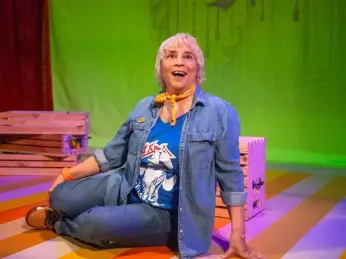
Bright-eyed and bushy-bushed, Gomez delivers her upbeat account of coming out, coming-of-age, and becoming her idiosyncratic San Franciscan self with just a pinch of annoyance amidst a boatload of buoyance; plenty of identity, but blissfully little politics.
In rather oddly informal comments to the audience at both the show’s opening and close, Gomez makes her mission clear: We are living “in difficult times,” we need laughter as relief from “all this shit.”
“Spanish Stew” provides comforting sustenance, to be savored among friends.

A one-woman light brigade
Throughout a speedy two-act presentation directed by Richard A. Mosqueda, Gomez briefly dips into an array of characters in addition to her own younger self: a lecherous landlady, a reefer-mad manager, a gullible girlfriend, and her boisterous parents (who were both entertainers) are brought to life not with imitative precision, but sketched-out affection. Gomez doesn’t embody the people she portrays so much as encapsulate her love for them.
Even Gomez’s mother, initially presented as judgmental and homophobic, is joyfully redeemed in the show’s second act, visiting San Francisco to reconcile with her newly out daughter and sharing a wild night on the town. Their revelry ends at storied North Beach punk club Mabuhay Gardens, one of a sprinkling of landmarks and touchstones that will delight longtime locals (the lesbian biker bar Scott’s Pit; Rolfing; the Rainbow Grocery bulletin board).
Nostalgia has a way of bringing sunshine to once stormy times, and Gomez –not known for pulling punches in her comedy– has intentionally kept this show’s atmosphere warm and balmy. Her reminiscences end before AIDS and sand the edges off the ’70s.
But this isn’t revisionist fluff; it’s a reminder that multiple perspectives are possible.
The positive light Gomez shines on the past is a welcome counterpoint to the pitch-black negativity so many of us indulge in the present.
Setting a tone
Set designer Ashley Mendez has designed an cheerful eye-candy environment for Gomez to frolic in, including a stage surface bedecked in stripes and polka dots. I wasn’t quite clear why it evokes a television studio (There’s an “Aplausos” sign) or why, amidst all of the super-saturated hues, projection designer Lana Palmer’s ever-changing backdrop images are all black and white, resembling an unused coloring book.
The set’s dominant color, emphasized by a plush curtain used in the show’s closing moments, is a vibrant, optimistic shade of orange many of us have been unable to see of late. This show can turn a bad mood on its head.
‘Spanish Stew,’ through Nov. 23. $35.50-$75.50. 25 Van Ness Ave. www.nctcsf.org