Nov 19
Gay Venezuelan makeup artist works to move forward after prison release
John Ferrannini READ TIME: 4 MIN.
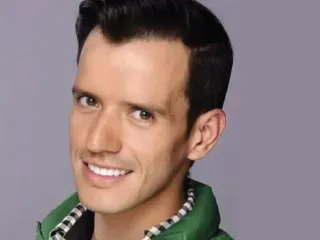
Months after his release from an El Salvador megaprison known for reported human rights abuses, a gay Venezuelan makeup artist is having trouble finding work because of how notoriety found him. Andry Jose Hernández Romero had been sent to the prison by the Trump administration earlier this year.
Hernández Romero, 32, told the Bay Area Reporter he is currently with his family in Venezuela. After opening up about his experiences at El Salvador’s Terrorism Confinement Center, known by the Spanish acronym CECOT, he stated, “Some beauty salons refuse to hire me because they associate me with criminality or say I belong to the Venezuelan government.”
He added that he is “attending to some clients who contact me because of all the labels imposed on us by the Trump administration.”
Asked what other plans he has in mind for the future, Hernández Romero stated he “will continue fighting for human rights and for the entire LGBT community. If it happens to one, it happens to all.”
He also wants to be able to open a foundation to help children with HIV, cancer, and those living on the streets, he continued, called the Angel of God Foundation.
“Otherwise, I’ll work hard and be able to help my parents,” he stated.
Hernández Romero said he wasn’t aware of the LGBTQ supporters who’d rallied for his release during his time in confinement.
“I didn’t know people were advocating for me in the four months and two days I was detained over there in El Salvador,” he told the B.A.R., in remarks translated from Spanish during a recent virtual interview. “I didn’t have any contact with the exterior. I didn’t know the time. I didn’t know anything.”
As the B.A.R. previously reported, Hernández Romero left Venezuela for the U.S. in May 2024, citing his political views and homosexuality as reasons to seek asylum. He had been detained at an immigration facility in San Diego since August of that year when he crossed the U.S.-Mexican border. He’d had a pre-arranged asylum hearing in San Diego at the time of his removal to El Salvador, according to reports.
“After I came, I right away got detained at the immigration center in San Diego,” he said during the interview. “I stayed for six months where I went to many different courts to ask for asylum.”
In March, Hernández Romero was among a group of Venezuelan migrants sent to El Salvador. Shortly after President Donald Trump’s second term began in January, his administration made a deal with Salvadorian President Nayib Bukele to house 238 Venezuelan migrants at CECOT. The megaprison was built as part of Bukele’s gang crackdown, and the Trump administration alleged that the migrants were members of the Tren de Aragua gang.
Also sent to the prison was Kilmar Abrego Garcia, a Salvadorian national who entered the U.S. illegally and was sent to El Salvador in spite of a 2019 judicial order against deporting him there. Trump administration lawyers conceded in a court filing he was deported as the result of an administrative error.
The Trump administration alleges Abrego Garcia is a member of MS-13, based on a determination made in a 2019 bail proceeding; yet Abrego Garcia has not been charged with or convicted of a crime in El Salvador or the U.S., and claims he is not a gang member. He is currently facing charges stemming from a 2022 traffic stop in Middle Tennessee and fighting efforts by the Trump administration to deport him to Liberia.
As for Hernández Romero, the government argued in court that crown tattoos he had were evidence of gang affiliation. Hernández Romero has a crown tattoo on each wrist, with the words “Mom” and “Dad.” His hometown Capacho, Venezuela is known for its celebration of Epiphany, the Catholic holy day when three wise men visited Jesus Christ.
Hernández Romero was mentioned in an early April episode of the CBS news magazine “60 Minutes.” The episode featured Time magazine photographer Philip Holsinger, who told CBS News that he was at the prison site when the migrants arrived, and that he heard a young man say, "I'm not a gang member. I'm gay. I'm a stylist." He was crying for his mother while he was slapped and had his head shaved, Holsinger said.
“I never got informed I would be taken to El Salvador,” Hernández Romero said in the interview with the B.A.R. “I never realized I was going to be sent to El Salvador until I landed, and the Salvadorian military received me. … Nobody told me absolutely anything. I just had to go to the plane, because that’s what they told me.”
When they arrived to CECOT, “everyone over there suffered from many different kinds of torture,” Hernández Romero continued, “physical abuse, mental abuse. They beat us.”
Asked about what methods specifically, Hernández Romero remembered “kneeling on the floor for a long amount of time, and they put us against a wall, with our chest on the wall, and we could not move for a long time. I lost sense of time, so I didn’t know how long the torture lasted, but it was very painful.”
Hernández Romero would not speak on the record about a topic that was “very sensitive” to him, and that he found “a little hard for me to talk about.” He did tell Venezuelan state TV, NBC News, (before the September B.A.R. interview) and the New York Times (earlier this month) he’d suffered sexual abuse.
The Times reported that he’d been sent by officers to an isolation room, where guards in hoods forced him to perform oral sex on them. They also abused him with a baton, groped him and touched him, according to the Times.
“I just screamed,” the paper quoted him saying.
The “60 Minutes” report galvanized the LGBTQ community in support of Hernández Romero’s release. Among them, longtime gay activists Cleve Jones and Nicole Murray Ramirez, who led an effort to have Pride celebrations in the U.S. name Hernández Romero an honorary grand marshal. While San Francisco Pride declined to do so, Pride by the Beach in Oceanside, California did.
Hernández Romero said that it was only after he was released that “little by little, I started learning about the people who supported me, and especially the people in [the U.S.] giving strength.”
Release
In the megaprison, Hernández Romero said the situation was bleak.
“There were many times they told me I’d stay there for 20 years, that I’d die there, that nobody would ever rescue us,” he said during the interview. “But we still had faith we’d go back to our families.”
On July 18, Hernández Romero was released. He said that there’d been rumors about the prisoners being released many times, so “I didn’t get my hopes up.” But this time was different because “there was a priest who would always come over to read the Bible to us, and he said something that planted the seed we might be released … ‘The miracle is done. Tomorrow is going to be a new day for you guys.’”
Hernández Romero was released as part of a deal with Venezuelan President Nicolás Maduro, whom the U.S. and much of the international community don’t recognize as the country’s legitimate president. The Venezuelans deported by the U.S. to El Salvador were exchanged for 10 Americans imprisoned in Venezuela.
“Until today, more Americans were wrongfully held in Venezuela than any other country in the world,” Secretary of State Marco Rubio stated July 18. “Every wrongfully detained American in Venezuela is now free and back in our homeland.”
Tensions between the Trump and Maduro governments have escalated in recent weeks, with the U.S. striking alleged drug boats near the South American country. On November 17, Trump didn’t rule out military action against Venezuela but did say he would “probably talk to” Maduro.
Reached for comment, Jones stated that he is concerned that Hernández Romero “and his family may suffer further due to Trump’s apparent wish to invade Venezuela.”
Asked what, if anything, he would say to those who imprisoned him, Hernández Romero said people shouldn’t generalize about those unfamiliar to them.
“I’m the kind of person who doesn’t like to generalize [that] everyone is bad or everyone is good,” he said. “In any country, there are good people and there are bad people and so just because there [are some in a] group that doesn’t do good things, that doesn’t mean all of them, that all the immigrants are that way.”
He also said that, “for all these negative things that happen to all of us, we also have to embrace the good things. For me, it made me more thoughtful, more positive. I’m more conscious about the risks I take if I take a rash decision.”
While he was in El Salvador, Hernández Romero’s U.S. asylum case was dismissed by an immigration judge. His attorneys at the Immigrant Defenders Law Center didn’t return a request to comment for this report.
Translation from Spanish was provided by Jose Ruiz, who is the reporter’s boyfriend.