Dec 22
SF aging department faces demand to fund HIV senior services
Matthew S. Bajko READ TIME: 4 MIN.
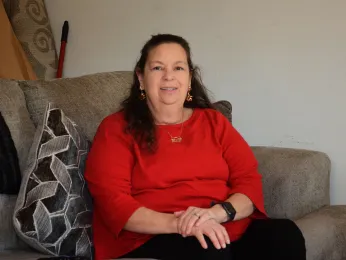
Since 1988, Betsy Ponce has been living with HIV. For much of that time, she has lived in San Francisco’s Excelsior neighborhood, where she is currently raising her granddaughters, one nearly 2 years old and a 4-year-old who has special needs.
A volunteer and board member with several nonprofits that work with people living with HIV, such as Healing Waters https://www.hwaters.org/ that arranges whitewater rafting trips and other outdoor adventures, Ponce has few options for herself when it comes to city-funded services. Because she is a cisgender, white heterosexual woman, she doesn’t qualify for most programs targeted to people living with HIV, Ponce noted during a recent interview with the Bay Area Reporter, her first with a news outlet.
“I couldn’t wait to turn 50 and get to be part of all these senior groups. But when I got to 50, there was nothing for me there either,” said Ponce, 59, who grew up in Oakland and has two daughters. “I will say, even with seniors, I think there also should be a lot more talk and information about HIV because I just, I feel they think because we are old and seniors that we are not human. We are still human; We are still sexually active.”
With those programs that do exist for women living with HIV, Ponce often faces stipulations against bringing her grandkids with her. It makes it impossible for her to participate because she can’t easily arrange for someone to watch them.
“Another thing for seniors not being addressed is the fact we are raising kids,” Ponce said. “You face questions of do you not make your appointments because of transportation, or you’re sick, or this or that. And no, I can’t find a babysitter.”
One program she has participated in only runs for six weeks then goes on a three-month hiatus, said Ponce. She would like to see more services offered to women like herself in the city on a more regular basis.
“Right now, I don’t want people to go through what I have been going through the last 37 years and that is not having a place in the community,” said Ponce. “That is the golden nugget. I have nowhere to go. Every community, every network has a place except heterosexual white women, at least in San Francisco.”
The city’s population of people living with HIV continues to age. According to the most recent HIV epidemiology report, for 2024, 75% of the 15,400 people living with HIV in San Francisco were aged 50 and up, while 48% were aged 60 and up last year. Of all people diagnosed at age 50 years and older, 39% were 50-54 years old, 28% were 55-59 years old, 19% were 60-64 years old, and 14% were 65 years and older, according to the data.
As the report noted, among those aged 50 years and older, 62% were white, 18% were Latine, 11% were Black/ African American, and 5% were Asian/Pacific Islander. The overwhelming majority, at 88%, of seniors living with HIV are men who have sex with men.
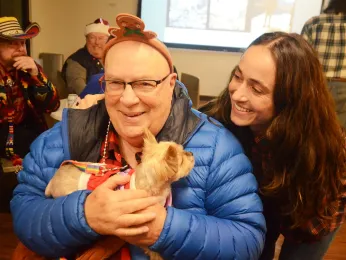
For gay granddad Homer Hobi, 80, who resides in the city’s Noe Valley neighborhood and has been living with HIV since 1994, his biggest concern is the lack of affordable housing in the city. Although he feels his housing is stable, Hobi told the B.A.R. he has lost many friends due to their moving out of San Francisco after they were evicted from their apartments and found themselves priced out of the housing market.
With that comes losing access to the doctors they had long seen and the health care programs offered by either city agencies or local nonprofits, noted Hobi. Not being able to maintain the medical care he receives via the city’s health department is his biggest fear were he ever to move outside San Francisco.
“Housing subsidies is one thing or another is just the need for more housing,” said Hobi, who has two children of his own and came out of the closet due to being diagnosed with HIV. “The thing is there are all kinds of things that happen when you are older with HIV. If you are 50-plus, you are at risk of stroke, heart attack, cancer; everything is a much higher risk. And the cornerstone of all of that is housing; if you lose your housing, you are screwed.”
Hobi and Ponce are among the seniors living with HIV who will be advocating to see that San Francisco’s Department of Disability and Aging Services, known as DAS for short, sets aside $300,000 in its 2026-2027 budget, as the city’s fiscal year begins July 1, specifically to provide services to seniors living with HIV.
“I think the city can be doing a much better job,” said Hobi, in terms of caring for that cohort of older adults.
A coalition of activists and HIV groups, including the San Francisco AIDS Foundation and the AIDS Legal Referral Panel, officially made the ask of DAS on National HIV & Aging Awareness Day, observed annually each September 18. They called out the city department for never designating funds specifically for services tailored to people aging with HIV despite the growing need within that community.
“Older people living with HIV/AIDS desperately need dedicated, experienced, and free legal advocates in their corner,” stated Matt Foreman, a gay man who is ALRP’s executive director. “It’s long past time for DAS to recognize the unique needs of this extremely vulnerable community.”
Need is apparent
As far back as 2010 a report on HIV and aging in San Francisco had flagged the lack of local resources for older adults living with HIV. It was a joint project between the city’s HIV Health Services Planning Council, which advises the health department, and the San Francisco Mayor’s Long Term Care Coordinating Council, which makes recommendations to the aging department.
“Although the population of older people living with HIV/AIDS in San Francisco is approaching a majority, an inventory conducted of publicly funded programs serving this group found no programs and no dollars allocated for targeted programs,” noted the report. “Although there are a few support groups through community-based organizations that exist for older people living with HIV/AIDS, the number is inadequate and limited in that these groups primarily targeted older gay men. No services from any funding stream targeting other demographics were identified.”
Among its many recommendations for how the city and its nonprofit partners could better address the needs of an aging HIV population was to increase the attention and resources allocated toward HIV-positive seniors.
“Due to the large numbers of older people living with HIV/AIDS in San Francisco, it is critical that San Francisco shift a substantial amount of its focus to address the needs of this population,” noted the report.
In response to the B.A.R.’s questions about the 2026 funding ask by HIV advocates, a spokesperson for DAS confirmed that the agency “does not currently have any services which specifically require an HIV diagnosis as an eligibility criteria.” In general, to be eligible for DAS services, a person either must be age 60 or older or an older adult with a disability, and in need of the particular service. (There may be additional eligibility requirements based on the specific service, the department noted.)
“DAS strives to have staff and programs which provide relevant and culturally competent services that is inclusive of all. We partner with community-based organizations for delivery of many of our services in community, and this includes organizations with a rich history of serving people living with HIV,” stated the department, pointing to the various LGBTQ programs it funds and are listed online here.
It remains to be seen if DAS will request the $300,000 being asked by the advocates for older adults living with HIV. The city is facing a projected deficit of $936 million in 2026, and Mayor Daniel Lurie recently asked department heads to help find $400 million via cost-cutting measures.
In its statement to the B.A.R. the aging department was noncommittal about doing so.
“Although we are still early in the budget planning process, DAS leadership will be meeting with the leadership of the San Francisco AIDS Foundation (SFAF) soon to learn more about their budget request,” stated the city agency in mid-December. “DAS also recently completed the community engagement portion of our community needs assessment process. This wide-ranging process included a focus group on HIV and Aging which was hosted in coordination with the SFAF. All of this will be helpful in understanding community need.”
Lobbying effort planned
Jonathan Frochtzwajg, a gay man who is SFAF’s director of health justice policy, told the B.A.R. the AIDS agencies and activists will also be lobbying the Board of Supervisors in the new year to include the $300,000 funding ask in their final budget if it is not included in the one Lurie submits to them. Since September, he said their focus has been more on the community and getting buy-in from different groups and long-term survivors of HIV.
“So, when we get into the meetings and lobbying, we will kind of have the community behind us is the idea,” explained Frochtzwajg. “The budget advocacy season sort of runs from January through when the budget is approved in July, so during that season we will ramp up our advocacy.”
Vince Crisostomo, a gay man who is director of aging services at SFAF and a longtime HIV survivor, said it is long overdue for the city’s aging department to dedicate a pool of funds for services targeted at older adults living with HIV. A decade ago he had served on DAS’ long term care council, and while there has been a lot of “lip service” about the needs of that population of seniors, it hasn’t resulted in any fiscal action, he noted.
“They have yet to fund anything,” he lamented, adding that, “It is frustrating and frustrating to my clients to know how many needs assessments have been done and how many times they’ve showed up for the city and they haven’t seen the proper departments respond.”
Added Frochtzwajg, “I think the city is catching up to the reality of an aging population of people with HIV. And DAS, which really should have been part of the city’s response 10 years ago at least, has not caught up with that demographic shift and picked up their fair share of meeting the needs of the community.”
While Hobi suggested any funds from DAS be put toward addressing the housing needs of older adults living with HIV, Ponce told the B.A.R. she wants to see the funding be used to offer women like herself a chance to find community with other women of the same age group who can understand what she has faced in her life. Not having that sort of resource has been isolating, she said.
“The priority for me as I am aging and getting older is the isolation and no one, like, really checking on you,” said Ponce, adding she would like a program “where I can network with other seniors who are going through what I am or have some idea.”
As their funding request will be coinciding with a municipal election year for the even-numbered seats on the Board of Supervisors, Hobi pointed out not only are older adults with HIV a sizable portion of the populace, they also vote. Thus, he hopes their pleas don’t fall on deaf ears at City Hall.
“We are a very large voting bloc,” noted Hobi. “The thing is everybody is cutting services right and left. Someone needs to do some nice things for us old folk.”