5 hours ago
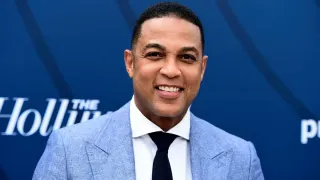
Don Lemon Says a Dozen Agents Were Sent to Arrest Him Even Though He Offered to Turn Himself in
Audrey McAvoy READ TIME: 3 MIN.
Don Lemon said about a dozen federal agents came to his Los Angeles hotel to arrest him last week, even though his attorney had told authorities he would turn himself in to face federal civil rights charges over his coverage of an anti-immigration enforcement protest that disrupted a service at a Minnesota church.
Lemon told ABC late-night host Jimmy Kimmel that sending the agents was a waste of resources because law enforcement wouldn't have had to dispatch agents to follow him if he had been allowed to surrender to authorities.
“I was walking up to the room and I pressed the elevator button, and then all of a sudden, I feel myself being jostled and and people trying to grab me and put me in handcuffs,” the independent journalist said Monday on the show on the show “Jimmy Kimmel Live!”
He asked the agents who they were and said they identified themselves. Lemon asked to see a warrant and was told they didn't have it. The agents then summoned an FBI agent to come in from outside to show Lemon the warrant on a cell phone.
The Department of Justice and FBI didn't immediately respond to messages seeking comment.
Kimmel introduced Lemon, his first guest of the night, by saying he was “was arrested for committing journalism.”
Lemon’s attorney has said Lemon plans to plead not guilty. He told reporters “I will not be silenced” after he was released in response to a judge's orders.
A grand jury in Minnesota indicted Lemon, another independent journalist, Georgia Fort, and others on charges of conspiracy and interfering with the First Amendment rights of worshippers during the Jan. 18 protest at the Cities Church in St. Paul, where a U.S. Immigration and Customs Enforcement official is a pastor.
Lemon, who was fired from CNN in 2023 following a bumpy run as a morning host, has said he had no affiliation to the group that disrupted the Sunday service by entering the church.
Lemon said he couldn't say much about the case but he said he was not a protester.
“I went there to be a journalist. I went there to chronicle and document and record what was happening. I was following that one group around, and so that’s what I did. I reported on them,” Lemon said.
Lemon said he asked the arresting officers if they would let him make a phone call. He said he was told no and that he could talk to his attorney the next day. He tried to use Siri on his Apple Watch to call his husband and his attorney but neither picked up.
A diamond bracelet he was wearing kept getting caught on his handcuffs, which hurt, and the agents told Lemon they would take it off. Lemon said he asked if the agent would mind taking it up to Lemon's husband in his hotel room and they agreed to do that.
“And that’s how my husband found out. Otherwise, no one would have known where I was,” Lemon said.
Lemon said he was kept in a holding room at the federal courthouse from midnight until 1 p.m. the following day.
Kimmel himself became a symbol of a fight against censorship last year, when ABC suspended “Jimmy Kimmel Live!” for remarks made following the assassination of conservative activist Charlie Kirk. Federal Communications Commission Chairman Brendan Carr had pressured broadcasters to take Kimmel off the air shortly before that.
ABC lifted the suspension after a public outcry, and Kimmel returned to the air with much stronger ratings than he had before. In Congress, Democratic senators raised concerns that Carr’s actions trampled on the First Amendment.