July 1, 2015
Mala Mala
Roger Walker-Dack READ TIME: 3 MIN.
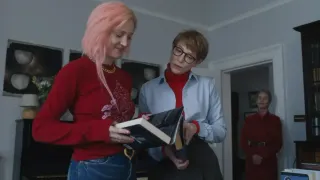
A chance encounter in a bar in Austin Texas with an eloquent drag queen was the impetus for filmmakers Antonio Santini and Dan Sickles to embark on a journey that would take them to Puerto Rico to explore the world of transgender people and drag queens. What they discovered and recorded in the fascinating new documentary "Mala Mala" was how the lives and the dreams of these two groups of people ranged from wanting to be successful beauty queens to simply being able to pass undetected in the street as a woman.
They chose to follow a handful of very diverse and colorful subjects who each had their own approach to dealing with their situation. There was Soraya, an older woman who was one of the few who had not only had a complete sex change but also a new birth certificate and strongly resists the term "transgender" and prefers to talk about her "gender dysmophia"; Ivana Fred, a very glamorous trans spokesperson who spends her nights handing out condoms and lube to her friends who are sex workers; and Sandy, who articulately expresses what sexual services she will do for her clients and those that she reserves for her boyfriend, who clearly dotes on her.
And then there were others like Queen Bee and Alberic Pradoc, who, as drag queens, live as men by day and then transform into ridiculously glittering women at night to perform in gay bars. One of their number, April Carrion, succeeds beyond his wildest dreams and gets selected to appear on "Ru Paul's Drag Race." He is not totally surprised, as evidently every season at least one of the contestants on this TV show is Puerto Rican.
What shines through all their stories is the sheer optimism, as with Sophia, a New-Yorker who had moved there because she had been told she would get laid easily (!) and is now a fully-transitioned woman. She is overweight and is hardly glamorous, but she is determined to succeed in her last remaining ambition of being able to shop in the supermarket without drawing undue attention. And stick-thin Samantha, who could only afford less-than-satisfactory black market hormones and has now been forced to temporarily stop her transitioning process, is determined that society should simply accept her as she is.
Whether it was the filmmakers' presence that propelled the girls, or just their luck at being in the right place at the right time, they were able to record and then collectively organize into the Butterfly Trans Foundation in order to improve their lot. They marched on the Capital, and their testimony before the State Legislature was so successful that it helped the passing of a piece of landmark legislation to give their equal rights. This was exactly what some of them, like Sandy, have always wanted, as she could finally stop doing demeaning sex work and get a real job like everyone else.
The success of Sickles' and Santini's excellent film starts with the spot-on casting choices that they made, as each of their subjects had a compelling story to tell of their own. The tales that unfolded were an insightful look into a community that is either ignored by filmmakers or so completely misunderstood that they are portrayed unsympathetically as if they are freaks of nature. The fact that these stories were related without adding any comment or moral judgement was a wise move, too.
Despite the poor economy of the Island which must have greatly impacted these girls' lives, we never see any of that curtailing either their spirits or their dreams. They are a joyous, life affirming collective whose strong sense of community, and the manner in which they support each other, is both very admirable and heartwarming.
By the way, the movie has been executive produced by Christine Vachon of Killer Films, and it's now easy to see why such an experienced Award Winning Producer went out on limb with these newbie filmmakers. They are a talent well worth watching.