January 8, 2016
The Forest
Kevin Taft READ TIME: 3 MIN.
It's the beginning of January, and those who follow film know that means one thing: It's dumping ground season for bad movies.
Sure, there are some high-profile films like the excellent "The Revenant" and Tarantino's latest opus, "The Hateful 8," but those are films that were technically released in December. I'm talking about films that open purposely when they can vanish without making waves. The first of those is the "horror" film "The Forest." Based on a real Japanese location dubbed "The Suicide Forest" (but not based on the Japanese horror film of the same name ), the story revolves around an American Girl whose twin sister goes missing in the forest; our heroine sets off to find her.
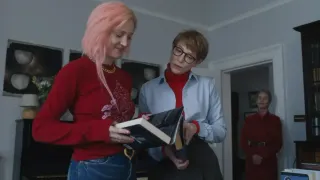
Starring Natalie Dormer ("Game of Thrones") as both Sara and her vanished sister Jess, the film opens with Sara already on her way to Japan. We get about thirty seconds of backstory and a call that her sister has gone missing, and off we go. Because of this, we know nothing about our main character, and any ability to care about what happens to her or her sister is lost.
Sara shows up at the school where her sister taught. She soon gets an education, herself, on the history of the forest where, she discovers, people go to kill themselves. Also, there are ghosts in there, and the forest itself supposedly makes you hallucinate and get really sad.
It's all sort of confused and overreaching, probably so the filmmakers can just have random scary things happen that don't make a lick of sense. After a few more flashbacks where we learn the history of what happened to Sara's family how the sibling's relationship was as young adults, Sara is ready to check out the forest. Stopping at an inn, she meets journalist Aiden (Taylor Kinney), who dazzles her with his ability to speak Japanese. The two become such fast friends that he invites her to join him the next day when he enters the forest with a guide who goes looking for suicide victims. She happily agrees, and the next morning the three head out. (She's always in fairly good spirits for someone whose sister has gone missing in a place with "suicide" in its name. But I digress.)
Here is where the meat of the movie is, and that meat revolves around people wandering aimlessly in a generic-looking forest. First time feature director Jason Zada tries to mine some suspense and weirdness out of fallen trees and moss, but it's about as scary as watching a nature documentary on the Discovery Channel. The screenwriters attempt to set up our fear by reminding Sara to "stay on the path" (which they immediately don't do) and suggesting that anything she sees is only in her mind.
This is the filmmaker's insanely cheap excuse to have a myriad of supposedly scary sequences that do nothing to move the story forward, nor are they remotely frightening, mostly because they are nonsensical. Random Japanese girls wander through the forest acting weird or having their faces turn all creepy, unknown things attack Sara's tent in the middle of the night, and she finds objects that are (or are not) really there. None of this is logical, mind you. It's just there to attempt to add some scares into a movie so relentlessly dull you actually long for those cheap moments. But even those are about as scary as a nine-year old showing up at your house on Halloween wearing a plastic werewolf mask.
Natalie Dormer - who is so good in "Game of Thrones" - fails to make an impression here. Perhaps it's her inability to master an English accent, which just makes her over-enunciate every word to the point where she doesn't sound natural. This gives the film a chuckle-worthy quality, and since she's in every scene of the film, it's a problem. Kinney ("Chicago Fire") is good eye candy, and is the most natural of the bunch, but he's saddled with this movie, so it's not going to propel his film career any time soon.
There are one or two minor twists in the end that finally wake the audience up, but even those ultimately have no point. When all is said and done you just ask yourself what the point of the film was -- and you realize there wasn't any.