March 11, 2016
Hello, My Name Is Doris
Frank J. Avella READ TIME: 4 MIN.
Twenty-four minutes into "Hello, My Name is Doris," the titular character, played by Sally Field, pops a CD into her vintage mini-boom box and hits Play. It's a track called "Dance Rascal Dance" by Baby Goya and the Nuclear Winters (a fictional progressive electronica rock band created for the film). As the song begins, Doris winces since the music is fairly foreign to her. The lyrics begin, "Dance like you're on fire," and Doris, seemingly taking the track literally, begins to jump up and down like she is actually on fire. But those odd headbang bee-bop moves metamorphose into a full immersion into the music via her own inimitable style - '50s-'60s retro meets every other peculiar technique one can guess she's appropriated through the years.
See, Doris is a hoarder, not just of stuff, but also of characteristics and modes of behavior as well as hopes and dreams and fantasies.
The 45-second dance clip is one of the zaniest, character-specific cinematic moments I've seen in ages, and there are quite a few more in store for viewers of director/co-writer Michael Showalter's initially ambitious indie.
Based on the 2011 short film "Doris & the Intern," written and directed by Laura Terruso (co-screenwriter here), "Hello, My Name is Doris" chronicles the romantic obsession one whimsical and wacky sixty-something has with a co-worker in his twenties.
As the film opens Doris Miller has just lost her mother, whom she had devoted herself to caring for in their "Grey Garden"-esque Staten Island home (okay maybe not that cluttered, but pretty messy). Doris is finally free to go out and forge a path for herself. The problem is, she's slightly developmentally arrested having been living in a structured insular world for so long.
Doris works in Manhattan as an accountant (one co-worker calls her a holdover) and, while on a crowded elevator one day, literally rubs up against the new company art director, John Fremont (a terrific Max Greenfield), who is very nice to her and compliments her crooked cat glasses after adjusting them. Doris is instantly enamored. She even swipes his pencil as a memento before he gets off the elevator. Thus begins Doris's infatuation.
Peter Gallagher shows up as the perfect motivational speaker who tells Doris that 'impossible' is a confounding word, since it really means "I'm possible." This helps set Doris on a path to pursue John.
With the aid of her best friend's 13-year-old niece (Isabella Acres), Doris creates a fake Facebook page in order to find out John's likes, which include Baby Goya and the Nuclear Winters, which leads to her attending a concert and running into John, which leads to a blooming friendship... or is it leading to more? That's one of the key questions that one hopes will be answered in a non-traditional manner, simply because, thanks to Field's magnificent work, we fall head over heels for Doris (named after Doris Day, BTW), and we are rooting for her to get what she wants, no matter how far-fetched it might seem.
Along Doris' timidly tenacious (a contradiction, but so is she) journey toward making a new life for herself, she gets grief from her bestie (a tough-cookie Tyne Daly), her therapist (Elizabeth Reaser), her selfish brother (Stephen Root) and his annoying and downright mean wife (Wendi McLendon-Covey).
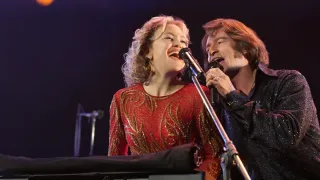
Most of the narrative seems to celebrate Doris's quirky, offbeat and idiosyncratic ways. There's a wonderful post-concert sequence where Baby Goya (a funny Jack Antonoff) is so taken with Doris that he wants her to be on the cover of his next album, which leads to an amusing, oddball photo shoot and Doris being the toast of the hipster town, at least for a brief spell.
What is so impressive about this portion of the narrative is everyone seems to think Doris is weird in a cool way, and are not making fun of her (the unfortunate norm in these kinds of movies). This gives the viewer hope that the film is veering in a fascinating, non-traditional direction... but, alas, the next day we are back where we were before the concert.
Doris also experiences some "Ally McBeal"-esque fantasy moments that are fun but, after the first one, become predictable since they're all about John wanting her.
The slightly disappointing latter portion of the film does the expected, instead of daring to venture into "Harold and Maude"-ish territory or even "Being There"-land, or finding its own Doris-worthy denouement that celebrates her unique and individual take on the world.
What anchors the film and makes it more than worthwhile is the woman that we have come to "like, to really, really like!"
Dressed like a schoolmarm from the mid 20th century, with her whirly but bundled-up hair, Field steps deep into the role and discovers more nuance and subtext, as well as empathy, than the script even hints at. It's a dizzying delight of a performance that lets loose with comic abandon and, in one major blowout scene with her sib, shows her dramatic chops (quite reminiscent of her losing it at the cemetery in "Steel Magnolias").
Field is never too precious or too psychotic. Sure she's weird, but as John describes her, she's a "good weird." Field makes her beguiling weird, desirable weird, and makes us all want to explore our own inner weird.