May 28, 2021
Review: Gorgeous, Glorious, and Painful, 'Moby Doc' Finds Meaning in Chaos
Karin McKie READ TIME: 2 MIN.
Writer/director Rob Gordon Bralver helms the trippy, innovative "Moby Doc," a 90-minute exploration of the electronic dance music composer.
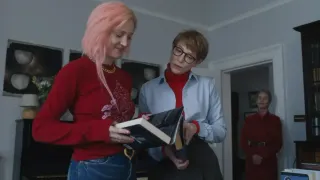
Moby narrates the film and curates the pastiche of elements including selected animation, puppets, archival and concert footage, the Childhood Trauma Reenactment Players, and, naturally, the pitch-perfect, haunting soundtrack. The entire affair has a David Lynch feel, which is appropriate as the oddball filmmaker is a featured interviewee. The pair met when Moby remixed his first hit, "Go," with elements of music from the Lynch-directed, cult-classic TV project "Twin Peaks."
David Bowie also holds a prominent place in the documentary, and in Moby's life. Bowie lived near Moby in New York, and they became friends and collaborators. But, as Moby notes, growing up poor in a wealthy environment (Darien, CT), as the child of an alcoholic dad and inattentive mom, set him on the path to loneliness and self-destruction.
Born Richard Melville Hall, Moby was drawn to animals (including rescued lab rats from his father's job at Columbia University's chemistry department) and music. In the '80s, he started following punk rock and DJing in New York City. His "intelligent dance music" eventually propelled him to international stardom, wealth, and temptations, re-exposing his youthful demons. He dropped in and out of sobriety, and lived the destructive rock star lifestyle.
Moby says, "Fame was so much fun, but it completely fucked me up. Every day I drank more and did drugs. It was amazing but terrible at the same time, a mix of narcissism and entitlement."
He adds that, "I had been given everything, but I had never been more depressed." His longtime vegan practice gave his life purpose and direction whenever he bottomed out.
The documentary is a distinctive take on excesses and existence. Moby's reflections hit home in the current moment of capitalist overindulgence. He notes that humans now work under the assumption that if we do the right thing, meet the right people, make enough money, get a home, and are recognized at our job, that everything will make sense. We can live happy and died contented.
"But that has never been the case for anyone," Moby notes.
Lynch also observes this "suffocating clown suit of negativity."
But Moby pushes through his spectacular meltdowns and existential crises to find meaning in his chaos. Throughout the film's faux therapy session scenes, he decides to "take the fear and make it interesting. To make it beautiful."
And his documentary is gorgeous, and glorious, and painful. And really cool.
"Moby Doc" opens May 28 in theaters and digital on-demand.