October 18, 2023
Review: 'Living for the Dead' Pits Gay Ghost Hunters Against Traumas of Life and Death
Karin McKie READ TIME: 3 MIN.
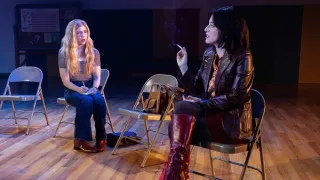
"You in danger, girl." Kristen Stewart executive produces and narrates the series "Living for the Dead," an eight-part reality show created by the "Queer Eye" show runners. The premise is an eerily similar franchise: Five queer ghostbusters travel around the American West and Midwest to understand, pacify, and/or banish belligerent specters while boosting the self-esteem of their living cohabitants.
Blond psychic Logan, cool-as-a-cucumber witch Juju, manic-pixie-dream-girl ghost hunter Alex, steam-punk-esque tarot card reader Ken, and statuesque paranormal researcher Roz drive around in a kitschy camper to exorcise the demons from their clients as well as from themselves. Their first stop in Episode 1 is the Clown Motel in Tonopah, Nevada, located right next to a cemetery, between Reno and Las Vegas. The question they're looking to answer is, "Who is this aggressive ghost clown and what does he want?"
The haunted hotel's owners Hame and Vijay fell in love with clowns as kids after seeing the circus in India. They subsequently collected clown dolls from all over the world, which they display in the lobby, much to the dismay of coulrophobes, folks who fear mischief-makers in makeup (which is apparently 50% of the population). Instead of dispensing grooming, cooking, fashion, self-help, or design advice, this queer quartet offers spooky accoutrements like incense and candle cleansings, tossed coin and bone readings, automatic writing sessions, séances (also called gayances and slayonces), a handheld pendulum to elicit spiritual yes and no answers, and technology like electromagnetic field sensors and a ghost box, which invites the dead to talk via the bandwidths between radio stations.
The nearby boneyard is filled with bodies of those who died in the Belmont mine fire, including Clarence David, who is summoned alongside the 16 others after their tragic 1911 accident. In real life, the mine managers made miscalculations and mistakes that caused the fire, followed by a coverup after the fact. The team manipulate residual and active energy to draw out the undead to solve their unrest.
Subsequent episodes visit Bisbee, Arizona's Cooper Queen Hotel and the troubled, lavender-scented working girls (and demonic entities) who reside within ("Spookiki with the Dead"). "A Haunted Gaycation" takes the team to a deserted modern mansion in Scottsdale, AZ, with a skeptical psychic owner. "Dying for Hallow-Kween" visits the iconic Waverly Hills Sanatorium in Lexington, KY, formerly a tuberculosis hospital and now a full-time haunted house, where spirits like to attach their violent energies to visitors while scared. "The Werking Dead" visits Kentucky's nearby Palace Theatre, where former employees haunt the messy projection booth (and would like it kept clean moving forward, please).
The series taps into Americans' current need to become their own pseudoscientists or create their own mythologies as a touchstone to combat the world spinning out of control, and to self-medicate with self-produced brain chemicals. The same reason people ride roller coasters and become social media edge lords will draw them to these types of controlled scares. The players and the series link queerness and spookiness, as several ask, "What's worse? Telling people that you're gay or that you see ghosts?" The five also note, for both LGBTQ+ people and undead types, "Healing your trauma is powerful."
"Living for the Dead" comes to Hulu on October 18th.